
TOTAL TIME: 40 minutes
YIELD: 2 servings
CALORIES: 770 kcal per serving
SPICINESS:

Koong Karee is known for its rich, velvety sauce that clings beautifully to the prawns. I first tried this dish at Soothr, a Thai restaurant in New York, and was blown away by its bold yet balanced flavors. As one of their signature dishes, Soothr even notes that it’s not something you can find at just any Thai restaurant. Curious, I searched for recipes online, and this version comes remarkably close — about 80% of the taste and texture of the one I had at Soothr.
INGREDIENTS 备菜

| Item 配菜 | Amount 用量 |
|---|---|
| Shrimp 虾 | 1 pound |
| Eggs 鸡蛋 | 2 |
| Yellow Curry Paste 黄咖喱酱 | 1 tbsp |
| Yellow Curry Powder 咖喱粉 | 1 tbsp |
| Tom Yum Sauce 冬阴功酱 | 1 tbsp |
| Coconut Cream 椰浆 | 300 ml |
| Flour 面粉 | as needed |
| Fish Sauce 鱼露 | 4 tsp |
| Brandy 白兰地 | 2 tsp (optional) |
| Oyster Sauce 蚝油 | 2 tsp |
| Sugar 糖 | 2 tsp |
| Butter 黄油 | 1 tbsp |
| Red Chili 红辣椒 | 1 (optional) |
- It’s best to use large black tiger shrimp — the ones from Costco work well.
- For a spicier version, you can replace the yellow curry paste with red curry paste or simply add some bird’s eye chilies. The yellow curry paste, tom yum paste, and curry powder I use are all common brands easily found on supermarket shelves in North America.
- Here we’re using coconut cream, not coconut milk — make sure to note the difference. About half of this dish’s calories come from the coconut cream. If you’re concerned about the calorie count, you can substitute it with coconut milk, though the sauce will be less thick and the texture won’t be as rich.
- Brandy is added when marinating the shrimp, but it’s optional if you don’t have any on hand.
- 虾推荐用大只黑虎虾,比如Costco的这个。
- 如果喜欢吃辣的话,可以将黄咖喱酱替换成红咖喱酱,也可以自行加一些小米辣。黄咖喱酱,冬阴功酱以及黄咖喱粉我都是用北美超市货架上常见的。
- 我们这里用的是椰浆,不是椰奶,注意下。这道菜一半的热量都是来自于椰浆,如果介意热量的话,可以换成椰奶,但是椰奶不如椰浆浓稠口感上会打折扣。
- 白兰地是腌制虾的时候加入的,但是没有的话也可以。
INSTRUCTIONS 做法
1. Remove the heads of the shrimp, cut along the back, and devein. For easier eating, you may peel off the shells and leave only the tails (in this recipe, the shells are kept). 将虾去头,背部剪开,去掉虾线。如果想吃起来更方便,也可以把外壳剥掉,只保留尾部。(这里我保留了虾壳)
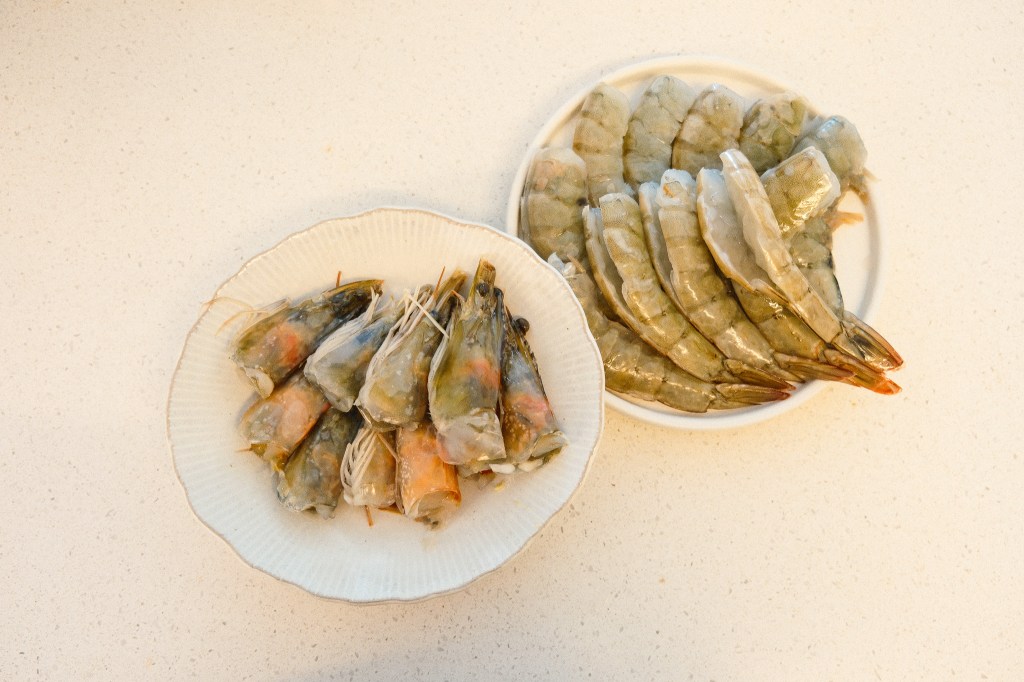
2. Marinate the cleaned shrimp with 4 tablespoons of fish sauce and 2 tablespoons of brandy (optional) for 10 minutes. 处理好的虾用4勺鱼露和2勺白兰地拌匀,腌制10分钟。

3. Beat the eggs and prepare a small amount of flour. 鸡蛋打散,面粉倒入少许备用。

4. Gently open the shrimp backs, dip them in the beaten egg, then coat evenly with flour. Reserve the remaining egg mixture for later. 将虾背部掰开,先蘸蛋液,再均匀裹上面粉。剩余蛋液留作后用。

5. Heat a little oil in a pan. Pinch the shrimp heads and tails together, place them back-side down, and fry until set. 锅中放少许油,将虾头尾捏在一起,背部朝下,油炸至定型。
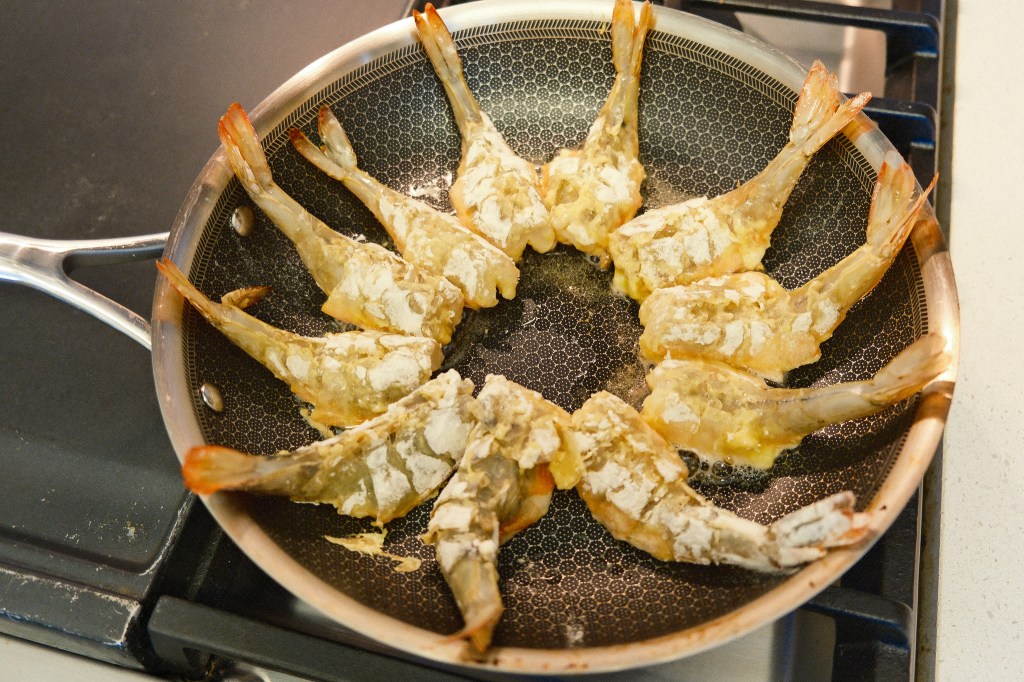
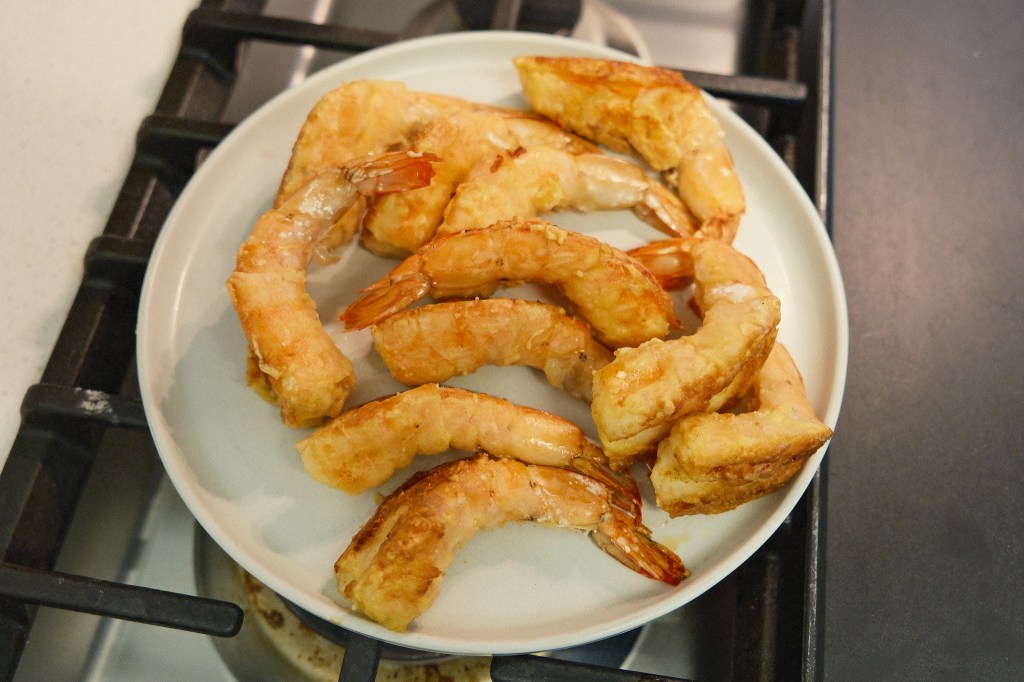
6. Then fry the sides until golden brown. Remove the shrimp and set aside. 再把虾两侧炸至金黄色,乘出备用。
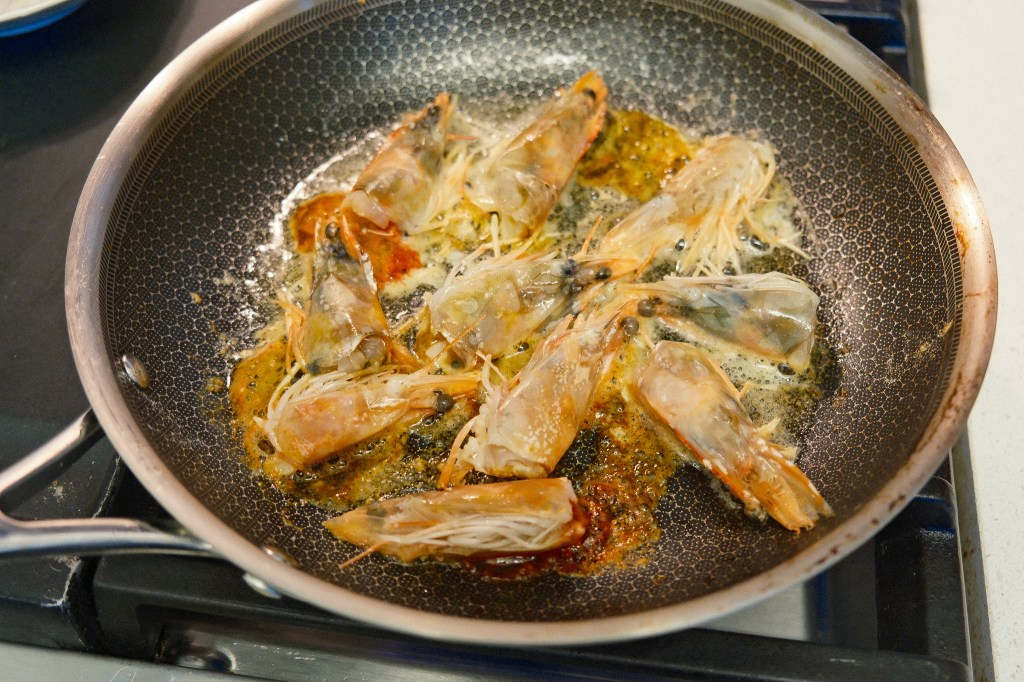
7. Melt butter and add the shrimp heads, frying until the rich shrimp oil is released (this step is optional). 另起锅,放入黄油加热,倒入虾头,煸出虾油(这步也可省略)。

8. Add 1 tablespoon yellow curry paste and 1 tablespoon tom yum paste. Stir well. 加入1大勺黄咖喱酱和1大勺冬阴功酱,炒匀。

9. Pour in 250 ml coconut milk and mix until smooth. 倒入250毫升椰浆,搅拌均匀。
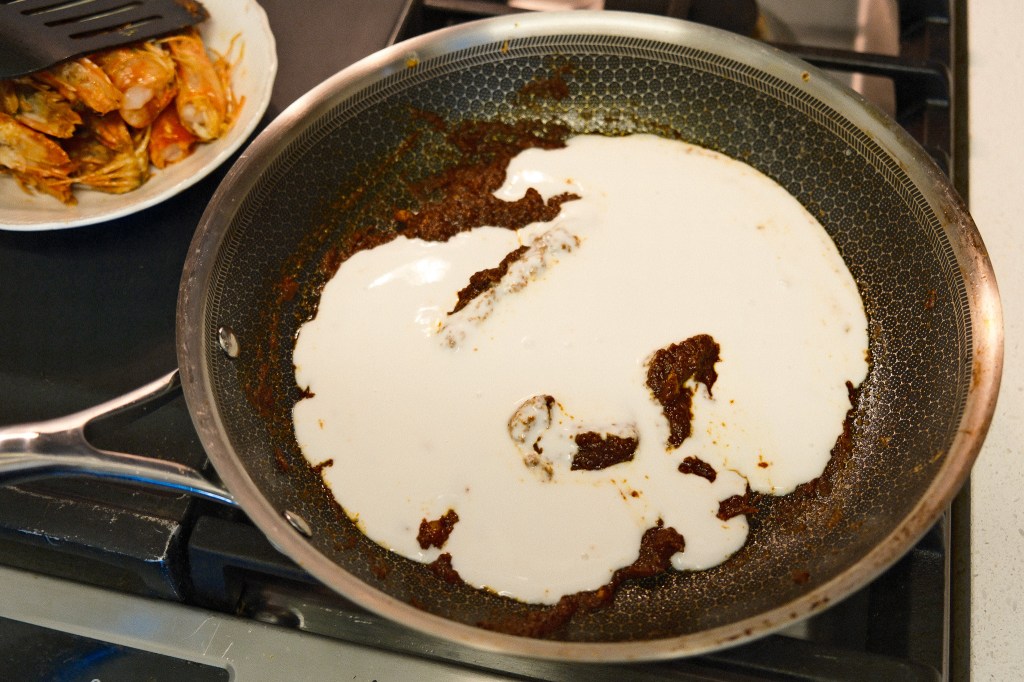
10. Add 1 tablespoons curry powder, half a small bowl of water, 2 teaspoons oyster sauce, and 2 teaspoons sugar. Stir and bring to a boil over high heat. 加入2大勺咖喱粉、小半碗清水、2勺蚝油和2勺糖,拌匀,大火煮开。
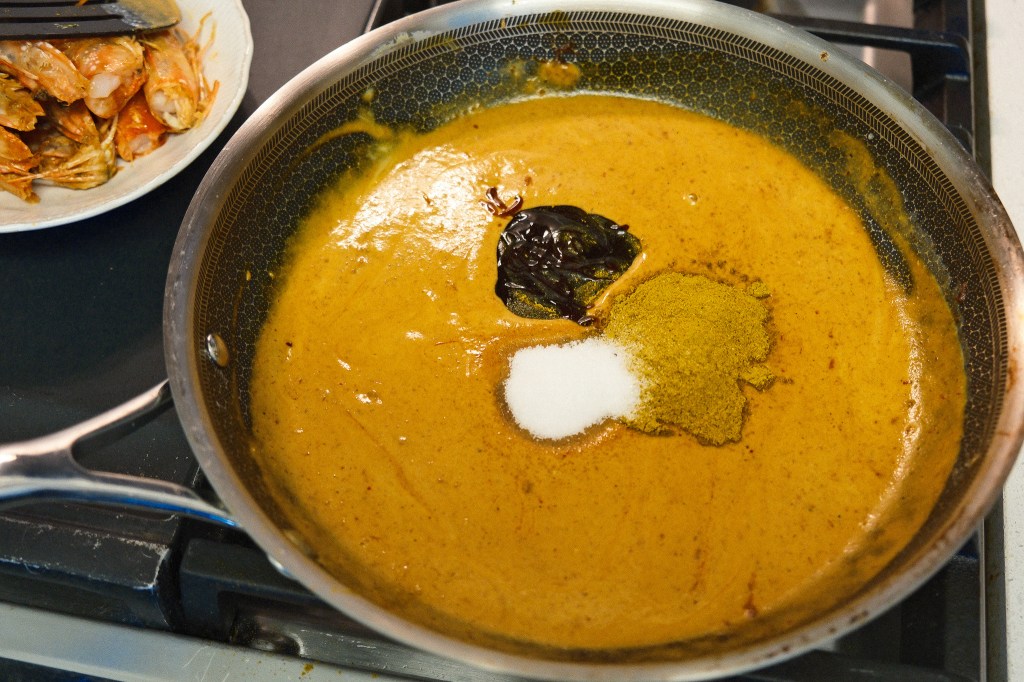
11. Add the red chilies (this step is optional). 加入红辣椒丝,但可省略。
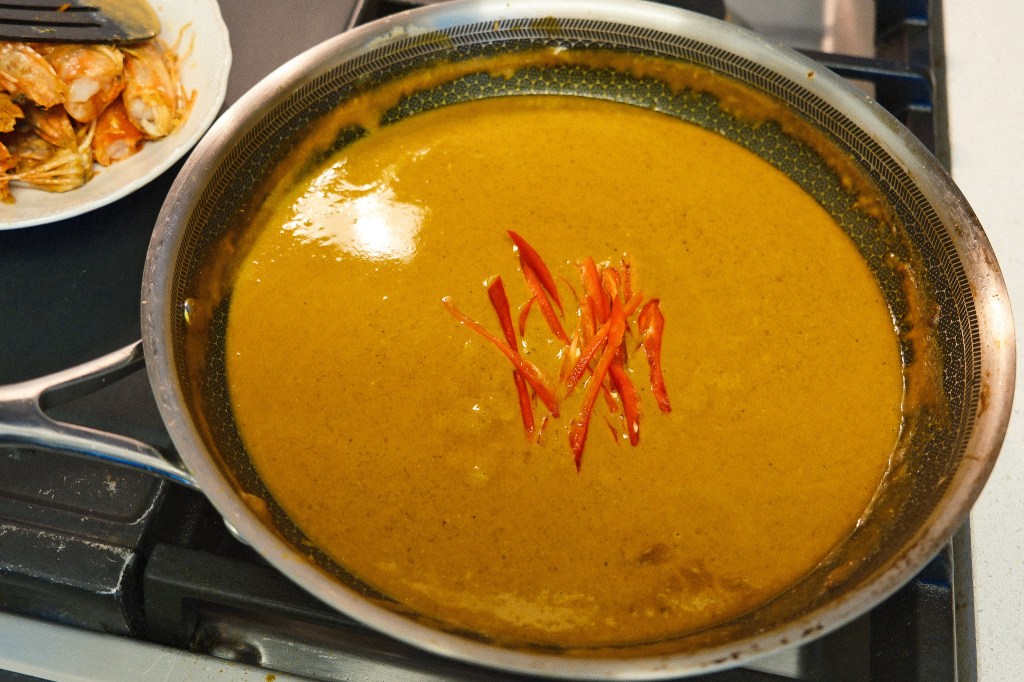
12. Add the fried shrimp and simmer over low heat for 2 minutes. Remove the shrimp and set aside. 放入炸好的虾,小火煮2分钟。将虾捞出备用。
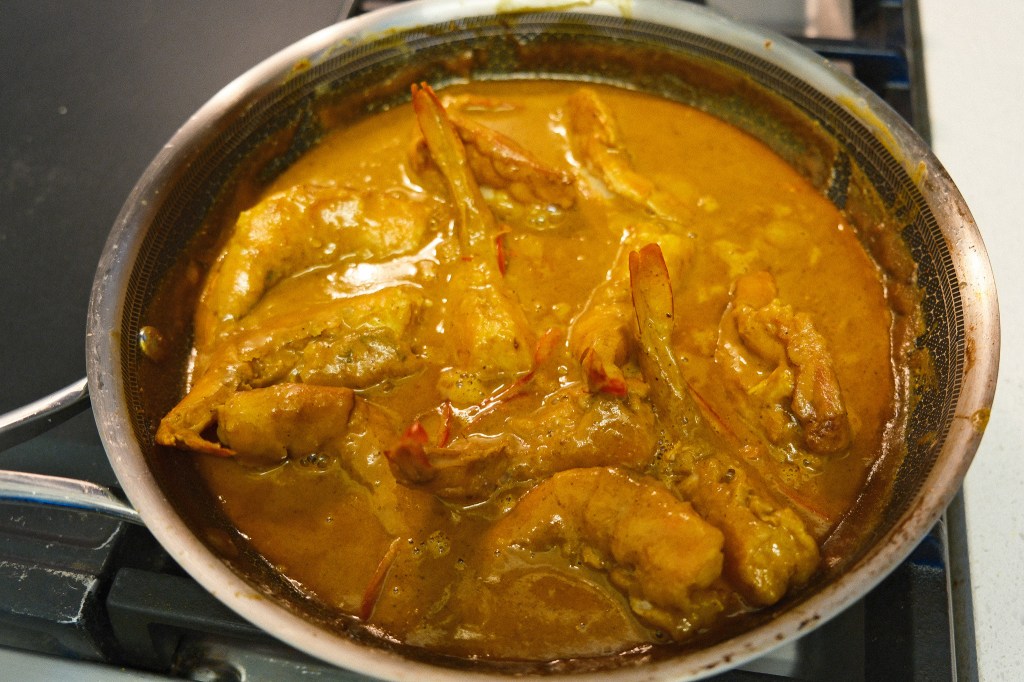
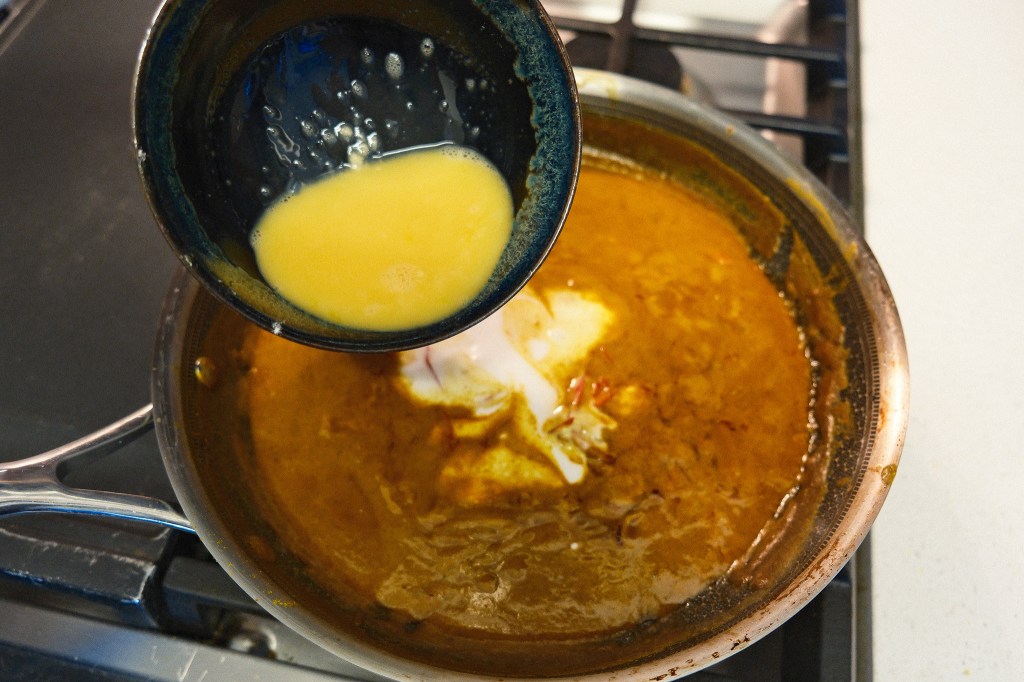
13. Mix the reserved egg mixture with the remaining 50 ml coconut milk. Pour the egg mixture into the curry sauce. Bring to a boil and stir continuously until the eggs slightly set and the sauce thickens to a creamy consistency. Pour the thickened curry sauce evenly over the shrimp and serve. 把剩余的蛋液与最后的50毫升椰浆混合均匀。将蛋液倒入咖喱酱中。大火煮开,用锅铲不断翻炒,直到蛋液微微凝固,酱汁变得粘稠。最后将浓稠的咖喱酱均匀淋在大虾上即可。
Voila! Bon appétit!

Tips:
- Since the flavor of Thai curry pastes and sauces can vary slightly by brand, you can adjust the main seasonings—yellow curry paste, tom yum paste, curry powder, and coconut milk—after adding them to suit your taste. 不同品牌的泰式酱料口味可能略有差异,因此黄咖喱、冬阴功酱、咖喱粉以及椰浆这些主要香料加入后可以根据口味适当调整。
- Before serving, feel free to add some vegetables of your choice. Besides pairing with rice, you can also toast some bread slices and use them to soak up the sauce. 出锅前可以加入一些自己喜欢的蔬菜。除了搭配米饭,还可以烤些面包片蘸着酱汁一起吃。
- If you enjoy more heat, add a bit of chili powder. 如果能吃辣,可以额外加入一些辣椒粉。





 the Soycialist